
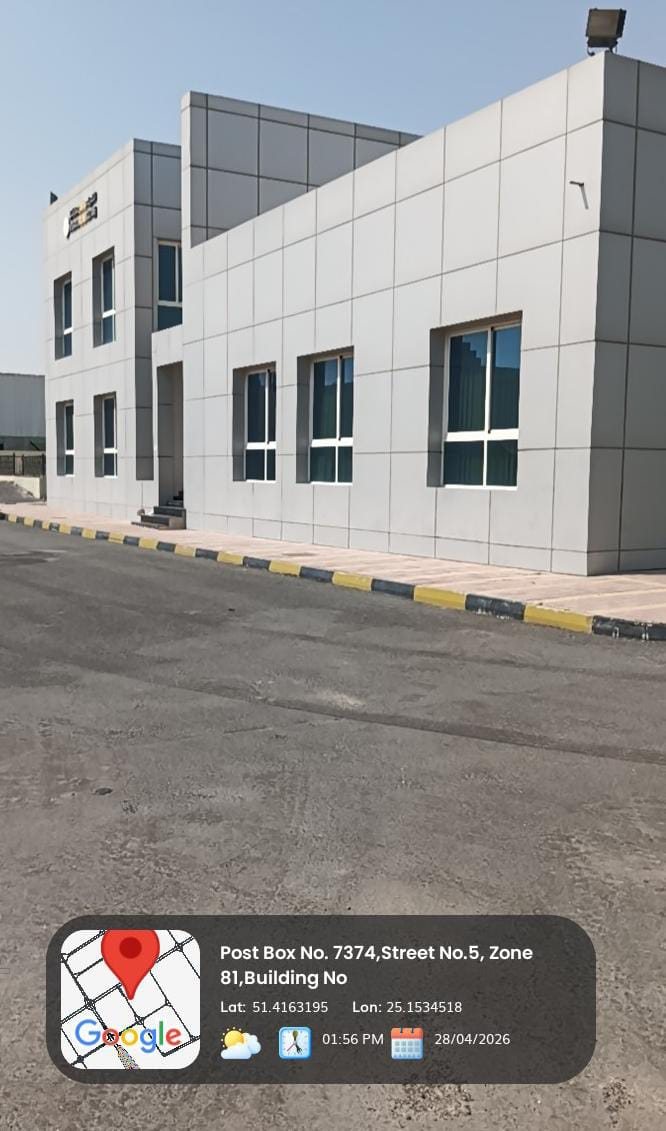
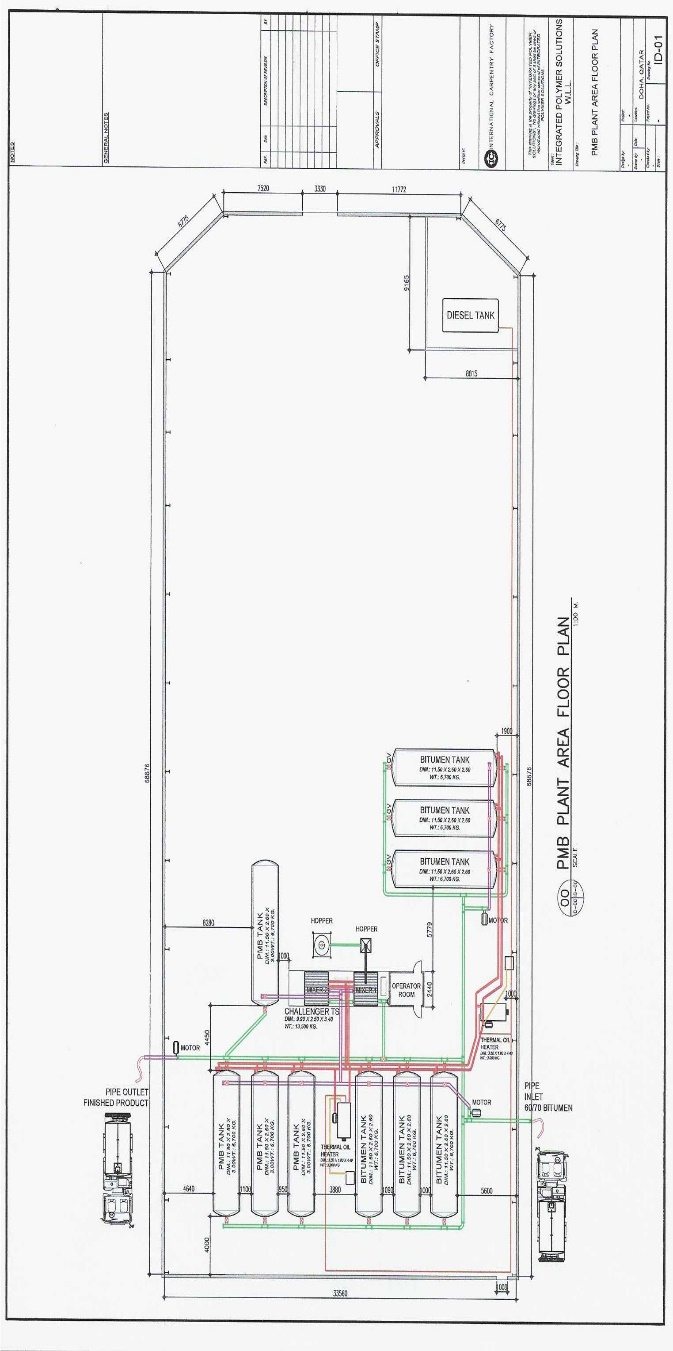
Located in the New Industrial Area, our fully automated terminal features a 15 mT/hr polymer modification plant, 600 tons of neat bitumen storage, and 200 tons of PMB/CRMB curing tank capacity.
| Plant Type | PMB Production Factory |
| Customer | Integrated Polymer Solutions W.L.L. |
| Model | ME 417/14 |
| End User | Integrated Polymer Solutions – Qatar |
| Manufacture Year | 2014 |
| Capacity | 15 tons/hour |
| PMB Bulk Tank | PMBTH 56 – Manufacture Year 2014 |
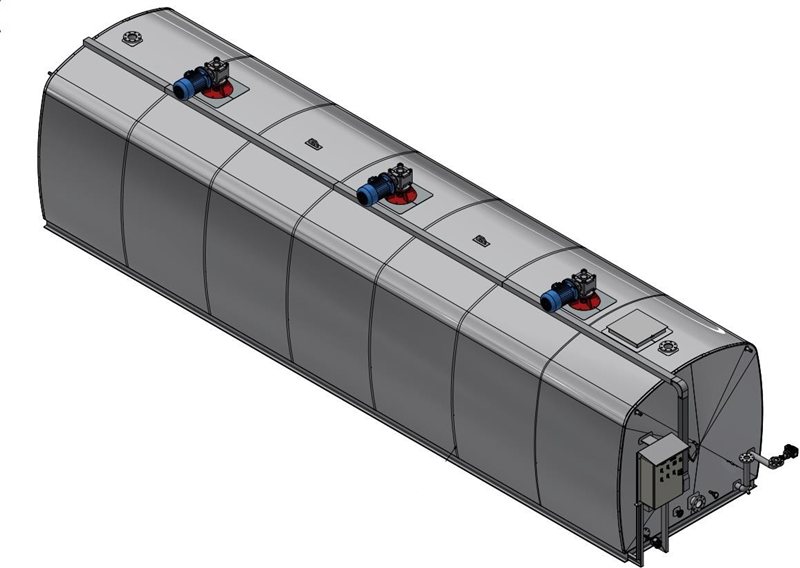
All 60/70 neat bitumen and PMB/CRMB curing tanks are equipped with motorized oil valves and control panels to set the required temperature and agitation time, avoiding excessive heating and PMB/CRMB phase separation. Heating is provided by No. 2 oil thermal heaters (each 600,000 Kcal).
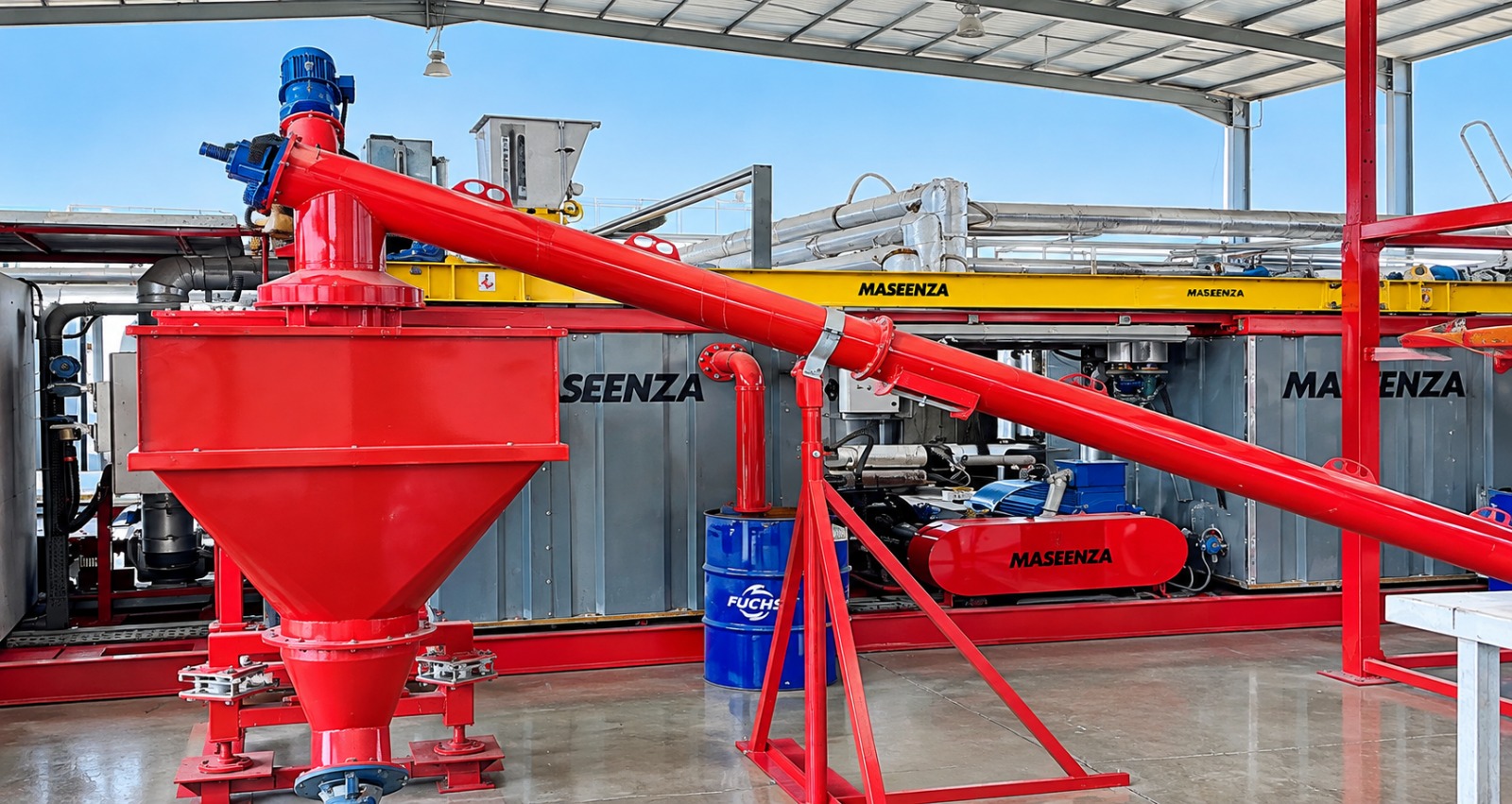
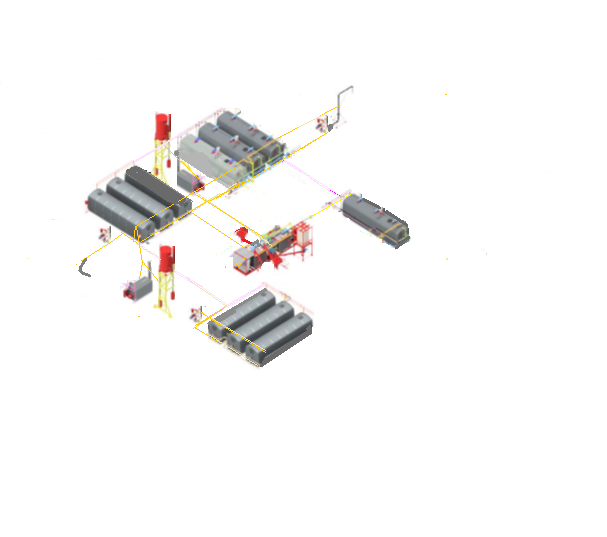
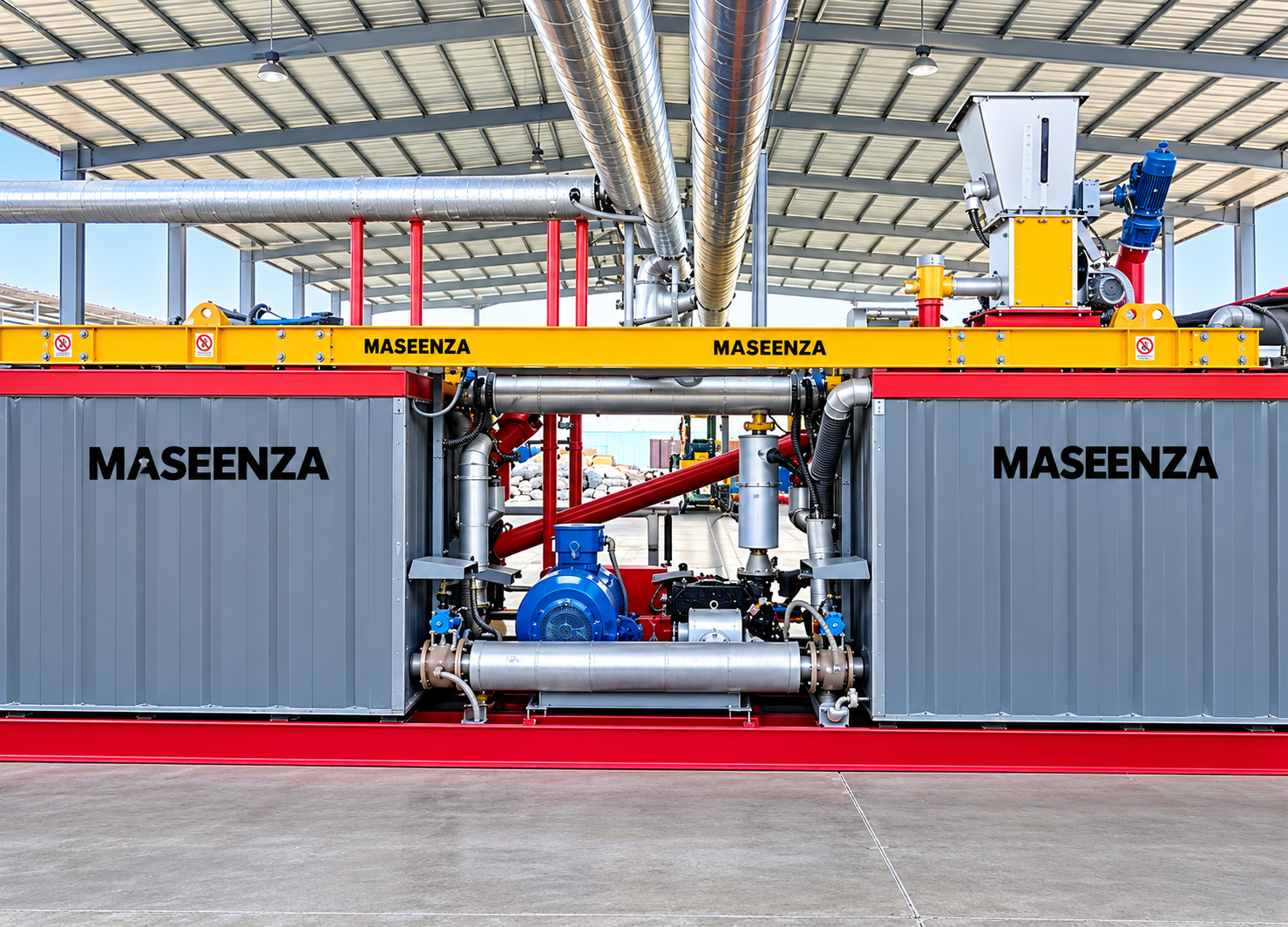
Neat bitumen 60/70 is metered precisely via mass flow meters. SBS polymer is weighed accurately through load cell weighing systems and fed via screw feed into homogenization tanks at 155°C–180°C.
Dual homogenization mills ensure complete digestion and microscopic polymer dispersion, preventing phase separation and guaranteeing supreme elasticity. Optimal shear mill capacity is 7–15 MT.
Equipped with No. 2 oil thermal heaters (600,000 Kcal each), motorized oil valves, and automated control panels to maintain exact curing temperatures and constant agitation.
Fully automatic operation via Massenza SCADA/HMI touch panels — real-time monitoring of dosing, homogenizers, mills, and curing tanks.
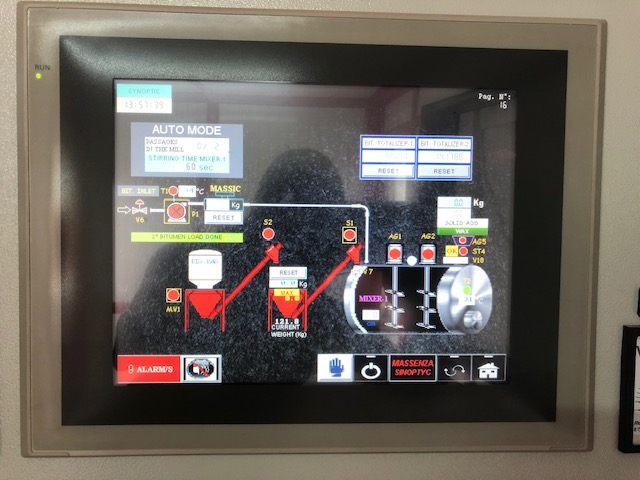
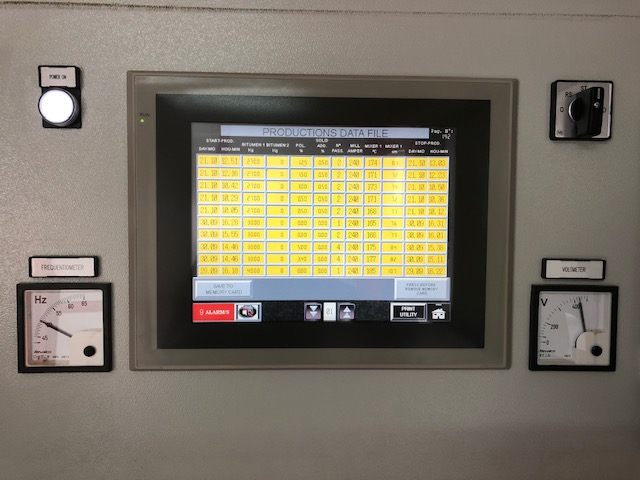
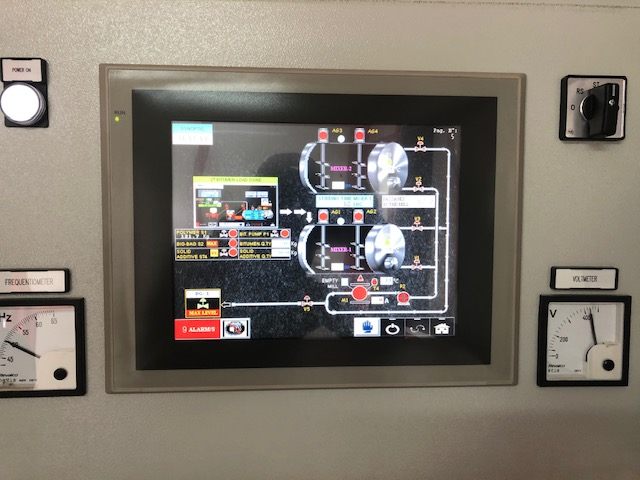
Neat bitumen 60/70 metered via mass flow meter; SBS weighed by load cell and fed via screw feed into the first agitation tank to soak before the high-shear mill.
Soaked SBS with neat bitumen loaded into Homogenizer 1 at 170°C–180°C; mill temperature maintained at 155°C. Additives and cross-linking agents added as required.
After a stipulated mixing time, the hot mix is transferred to Homogenizer 2 for final high-shear dispersion of the polymer network.
Material transferred to storage/curing tanks under constant temperature and agitation for proper dispersion; samples drawn directly for quality testing.
The number one rule for storing, handling and sampling modified binders: always handle and store the product at the lowest possible temperature for the shortest possible period of time. Excessively high temperatures cause polymer degradation through volatilization and oxidation.
| Storage Duration | Recommended Temperature | Agitation Requirements |
|---|---|---|
| Short-term (up to 3 days) | 160°C (±5°C tolerance) | Without mandatory continuous agitation |
| Medium-term (up to 14 days) | 140°C – 150°C | Without agitation (reheat gradually) |
| Long-term (more than 14 days) | 130°C – 145°C | Mild agitation prior to production |
Always ensure 1–2 hours of agitation prior to beginning HMA production and maintain agitation throughout. When PMB is cold, reheat gradually — preferred heating rate not more than 10°C per hour, with agitation beginning at 155°C (±5°C). Storage temperature should never exceed 180°C.
Request a quotation or technical data sheet from our Doha team.